
Supporting your child to connect their way.
Speech pathology for autistic children that respects how your child experiences the world, building communication, language and connection in ways that feel safe and meaningful to them.
Communication support that honours who your child is
Autistic children communicate in many different ways, and every child has their own profile of strengths and challenges. Some children are highly verbal, others use few or no spoken words, and many use a mix of speech, gesture, signing or communication devices.
We take a neurodiversity affirming approach. Rather than trying to make autistic children appear less autistic, we focus on giving every child reliable, respected ways to express themselves, to be understood, and to connect with the people around them.
We work closely with you and, where helpful, with your child's educators and other professionals, so the support is consistent across home, kinder and school.
When speech pathology can help
Every autistic child is different. You might consider an assessment if you notice some of the following.
Preference for routines and predictability
Differences in social interaction
(e.g., forming friendships, understanding social cues)
Literal understanding of language
Differences in use of eye contact, facial expression and gestures
Delayed language development or use of highly formal or scripted language
Use of echolalia
(repeating words or phrases)
Differences in understanding others' perspectives or emotions
Repetitive movements or behaviours
Strong or focused interests in specific topics
Playing with objects in repetitive or unique ways
(e.g., lining up toys)
Differences in imaginative or flexible play
Sensory sensitivities
(e.g., to noise, textures, lights)
This list is a guide, not a checklist. If something about your child's communication is on your mind, we're happy to talk it through with you.
Therapy shaped around your child
We start by getting to know your child, what motivates them, how they already communicate, and what would make the biggest difference for them and your family. From there we build a plan together.
Get to know your child
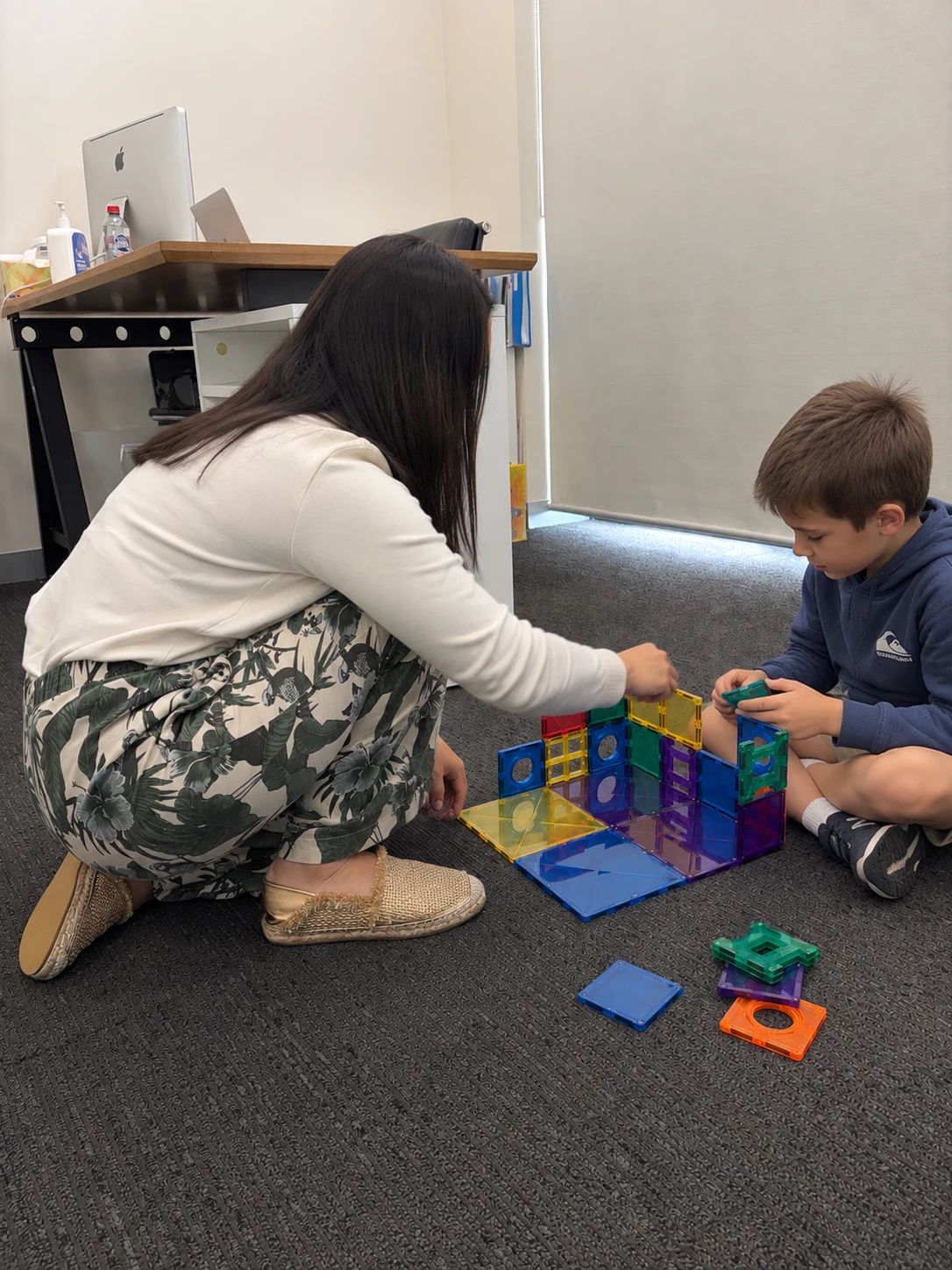
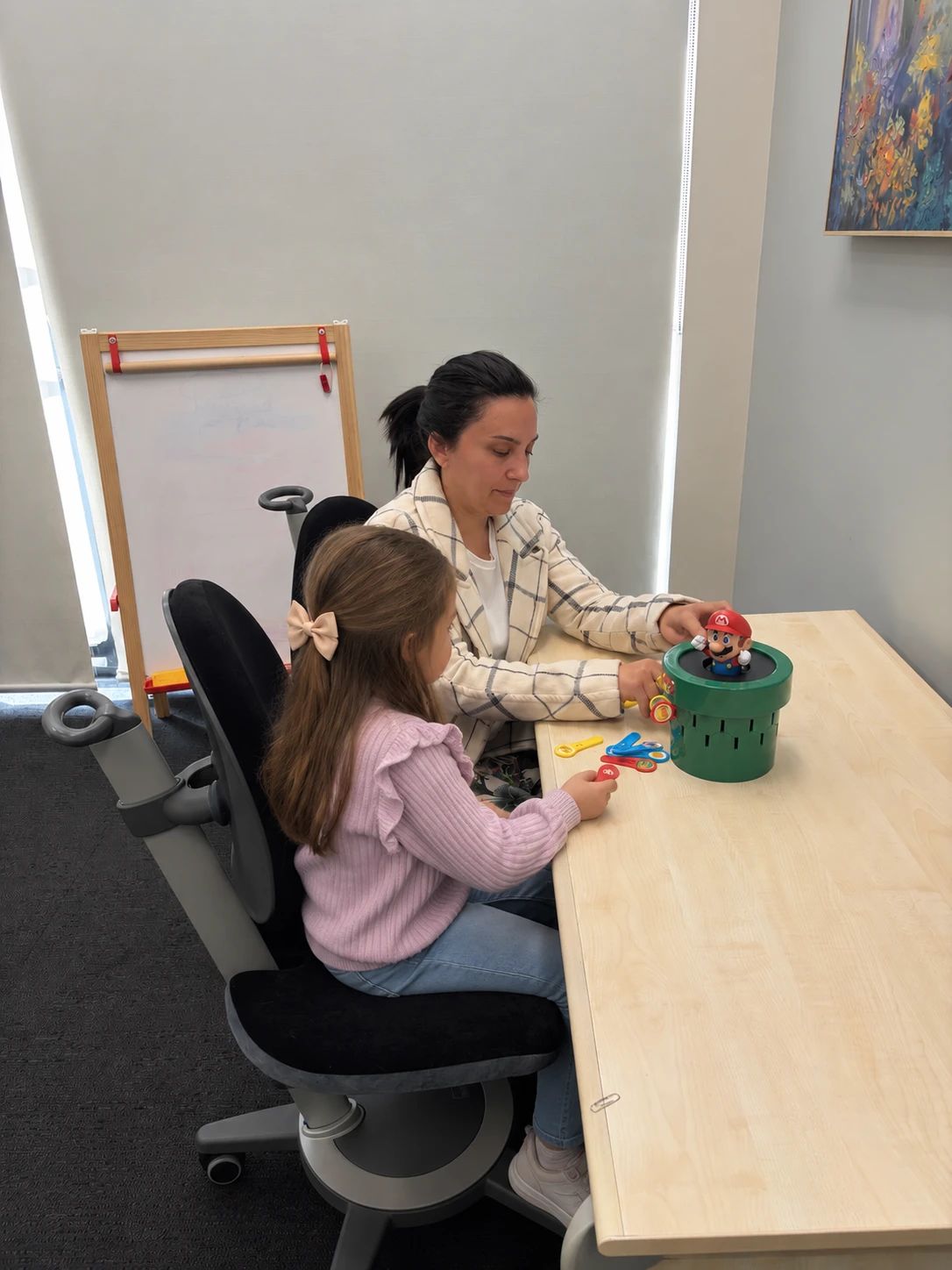
We observe and play, learning your child's interests, strengths and current communication, so therapy builds on what already works.
Total communication
We honour every form of communication, speech, gesture, signing and AAC, so your child always has a way to be heard.
Meaningful, motivating goals
Goals are functional and chosen with you, focused on the communication that matters most in your child's daily life.
Coaching for everyday moments
We share strategies you can weave into play, mealtimes and routines, so progress continues between sessions.
Questions families often ask
Do you only work with children who can talk?
Is your approach neurodiversity affirming?
My child already has a diagnosis. Can we start therapy straight away?
Can therapy be funded through the NDIS?
Let's talk about your child
Whether you have a diagnosis, are still wondering, or simply want to chat about your child's communication, we'd love to hear from you.
Make an enquiry
We'll get back to you as soon as we can.