
Early support that builds confident communicators.
When communication is developing more slowly than expected, early speech pathology can make a real difference, building the skills your child needs to connect, learn and join in.
Understanding developmental delay
Children develop at their own pace, but some children are slower to reach communication milestones than their peers. This might show up in how they understand language, the words they use, the sounds they make, or how they interact and play.
A developmental delay isn't a diagnosis in itself, it simply means a child needs some extra support to build skills that are taking longer to emerge. The earlier that support begins, the more we can do during a period when young brains are especially ready to learn.
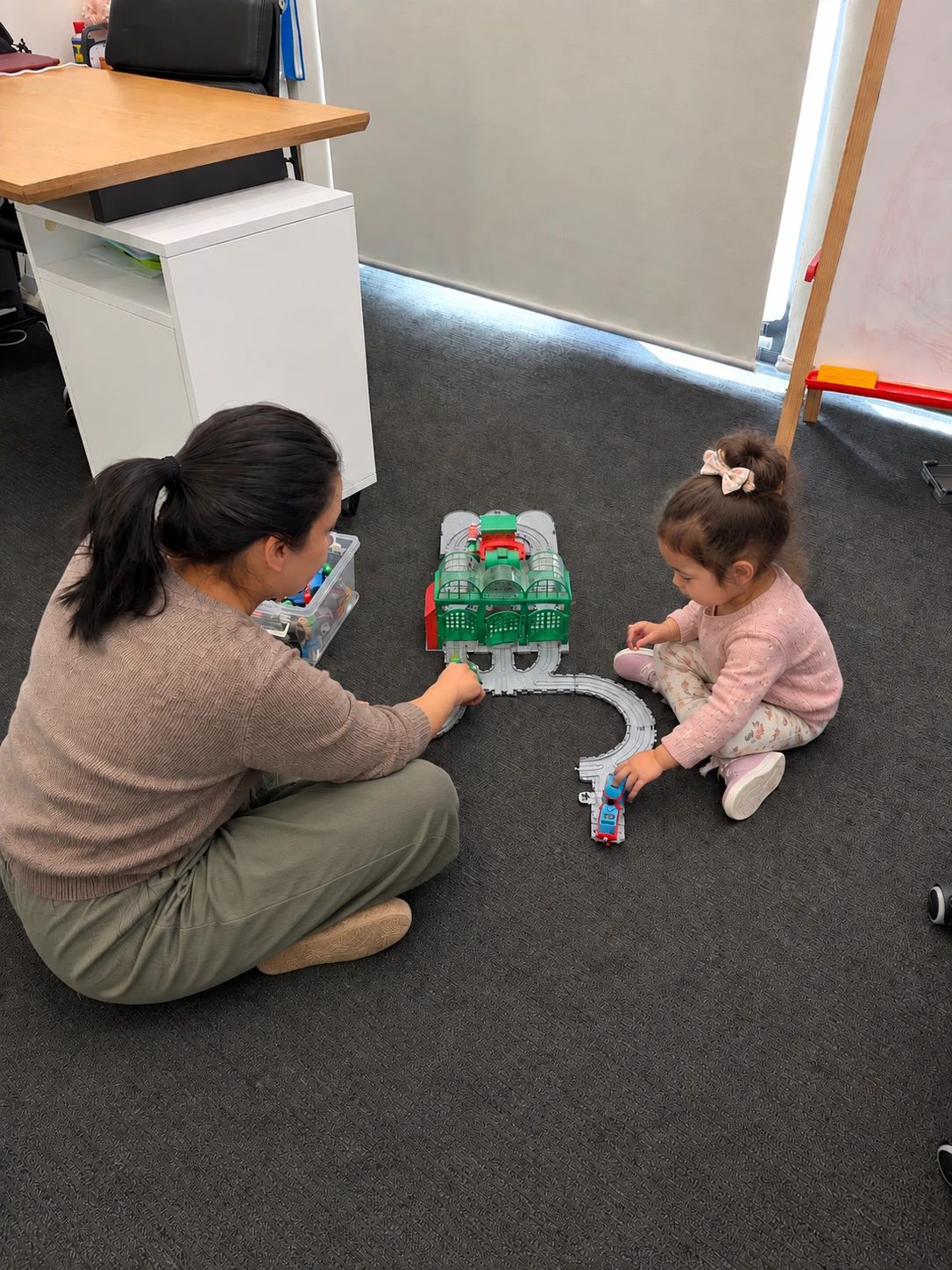
We work in a playful, low pressure way, and we coach you too, because the everyday moments you share with your child are where the most powerful learning happens.
Milestones worth a closer look
Every child is different, but these are some of the things that can prompt families to seek support.
By the age of one, your baby may be able to:
- Respond to familiar sounds (e.g., telephone, vacuum, car)
- Understand simple words such as "no"
- Recognise their own name
- Understand names of familiar people and objects
- Say "mum", "dad" and a few other words
- Enjoy songs, music and books
- Attempt familiar sounds (e.g., animal or car noises)
- Identify familiar objects from a small group
By the age of two, your toddler may be able to:
- Name simple body parts (e.g., nose, tummy)
- Listen to simple stories and label pictures
- Understand simple questions (e.g., "Where's your shoe?")
- Use around 50 or more words
- Talk during play (to self or toys)
- Sing simple songs
- Begin using pronouns (e.g., "he", "it")
- Use simple phrases (e.g., "milk all gone")
- Name familiar objects in photos
By the age of three, your child may be able to:
- Understand how objects are used
- Express basic needs (e.g., hunger, tiredness)
- Follow simple directions
- Use 3 to 4 word sentences
- Begin to use basic grammar
- Ask questions and enjoy simple storytelling
- Be understood by familiar adults
By the age of four, your child may be able to:
- Understand colours and basic concepts
- Understand some time-related words (e.g., today, after)
- Ask "who", "what" and "why" questions
- Use longer sentences (4 to 5 words or more)
- Use mostly correct grammar, with some errors
- Use language during play with others
- Be understood by most people
If your child was born prematurely or has another diagnosis, their communication may develop differently, and early support can be especially valuable.
Building skills through play
We assess where your child is across understanding, expression, play and early sounds, then create a plan that grows their skills step by step, in ways that feel like fun.
Assess the whole picture
We look at understanding, talking, play and interaction together, so we can see your child's strengths and where to focus.
Play as the vehicle
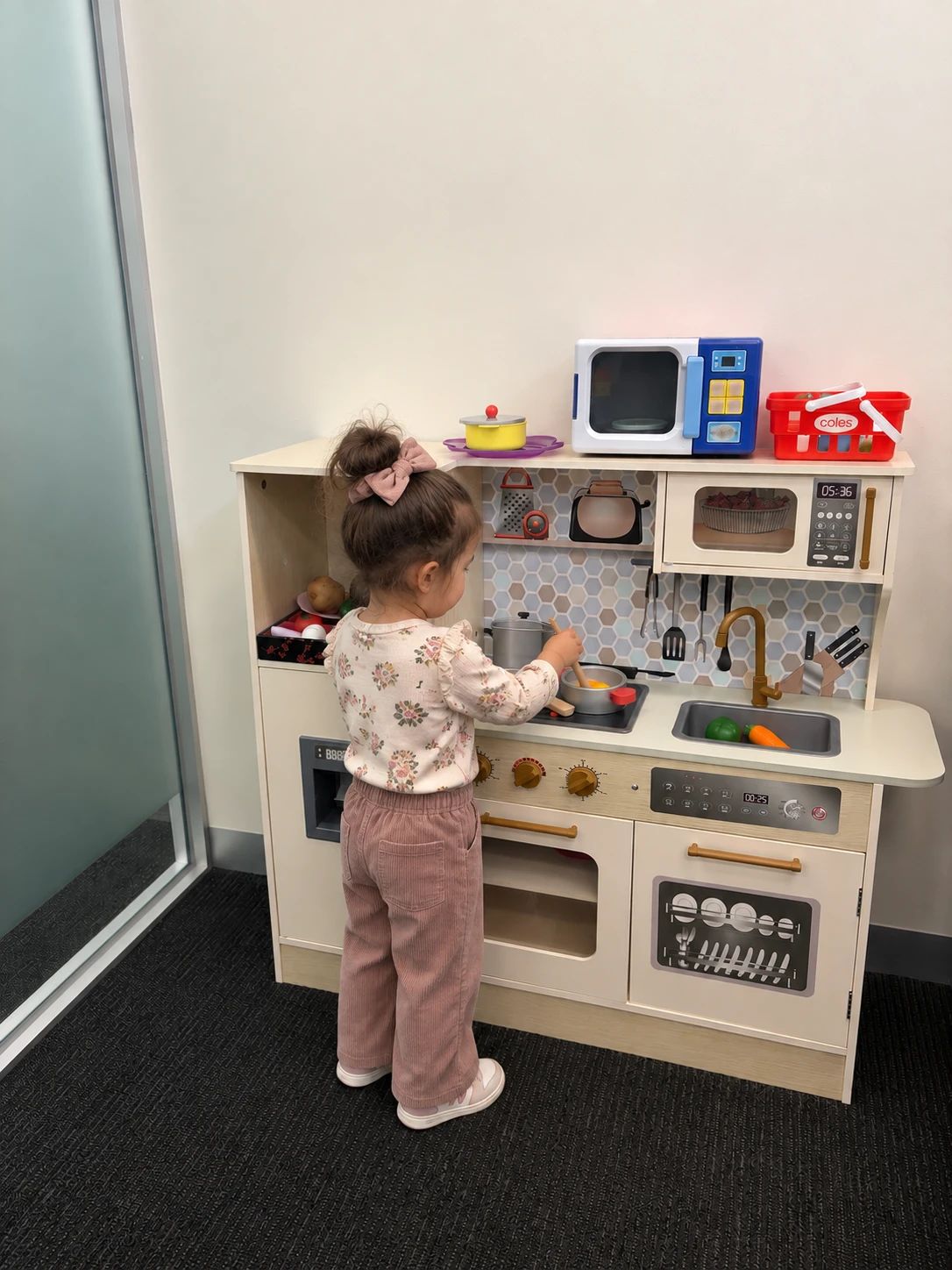
Young children learn best through play, so therapy looks like play, motivating, hands on and built around what your child enjoys.
Coach the everyday
We show you simple, powerful strategies to use during play, books and routines, multiplying your child's practice every day.
Track and adjust
We review progress regularly and adapt the plan as your child grows, celebrating each new skill along the way.
Questions families often ask
My child might just be a late talker. Is it worth getting help?
How early can speech pathology start?
Do I need a referral?
What will I need to do at home?
Wondering about your child's development?
If your child's communication is taking longer than you expected, let's talk. Early support is one of the most valuable things you can offer.
Make an enquiry
We'll get back to you as soon as we can.