
Supporting smooth, confident speech.
Evidence based programs, including the Lidcombe and Camperdown approaches, to help children and adolescents who stutter speak more fluently, and feel confident and comfortable when they communicate.
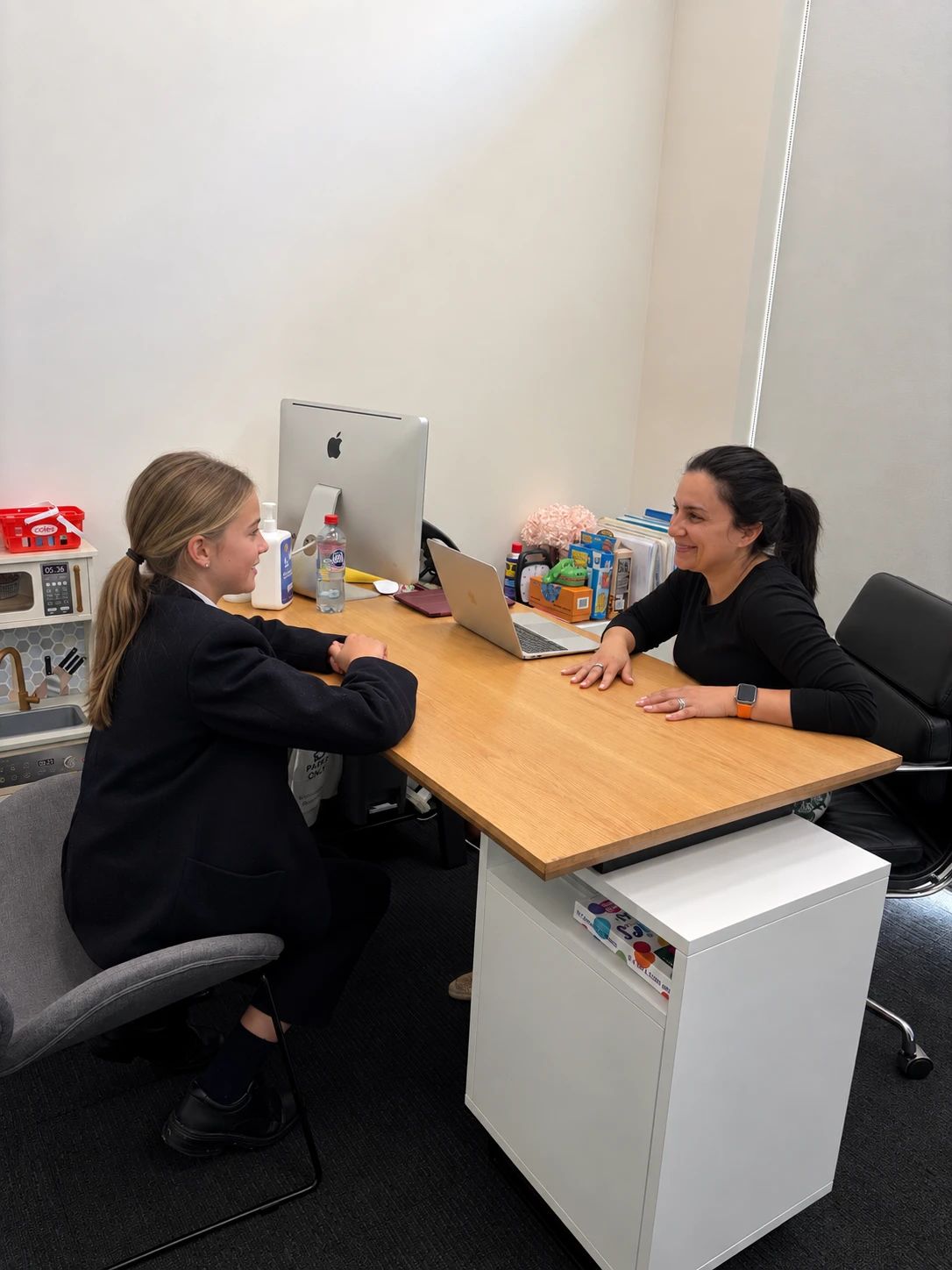


Understanding stuttering
Stuttering affects the flow of speech. It can look like repeating sounds or words, stretching sounds out, or moments where speech gets stuck or blocked. It often appears in the preschool years, when language is developing rapidly.
Stuttering is not caused by anxiety or anything parents have done, though it can affect how a child feels about talking. Some young children's stuttering resolves naturally, but it's not possible to predict which children will, and early treatment is highly effective.
We use well researched programs proven to help. For young children, the Lidcombe Program is a parent delivered approach with strong evidence. For older children and teens, the Camperdown Program offers an effective path to smoother speech.
Signs of stuttering
Stuttering can vary from day to day. You might notice some of the following in your child's speech.
Repetitions
Repeating sounds, syllables or whole words, such as 'b-b-ball' or 'I-I-I want'.
Prolongations
Stretching a sound out, such as 'mmmmummy'.
Blocks
Moments where the sound gets stuck and no speech comes out for a beat.
Tension or effort
Visible struggle, tension or extra movements when trying to get words out.
Avoidance
Swapping words, giving up on sentences, or avoiding speaking in some situations.
Frustration
Frustration or self consciousness about talking, especially as children get older.
If your child has been stuttering for more than a few months, or it's increasing or upsetting them, it's a good idea to seek support sooner rather than later.
Proven programs, delivered with care
We assess your child's fluency and the impact it has, then choose the program best suited to their age and needs, supporting you to deliver practice that works.
Assess fluency and impact
We measure the stuttering and understand how it affects your child day to day, so treatment fits their situation.
Lidcombe for young children
A parent delivered, evidence based program for preschoolers, we coach you to deliver it confidently at home.
Camperdown for older children
For school aged children and teens, a structured program that builds a smoother, more comfortable way of speaking.
Build confidence too
Alongside fluency, we support how your child feels about talking, so they can communicate without fear or avoidance.
Questions families often ask
Should I wait to see if my child grows out of stuttering?
What is the Lidcombe Program?
My child is older. Can they still be helped?
Did I cause my child's stuttering?
Concerned about your child's fluency?
If your child is stuttering, early support makes a real difference. Reach out and we'll talk you through the options.
Make an enquiry
We'll get back to you as soon as we can.