
Helping your child be clearly understood.
Articulation and phonology therapy that helps children say sounds clearly, so they can be understood by family, friends and teachers, and feel confident speaking up.

Understanding speech sound difficulties
Learning to say all the sounds of speech takes time, and it's normal for young children to make mistakes as they grow. As children develop, their speech should become clearer and easier for family, friends and unfamiliar people to understand.
Being understood matters. It helps children communicate their ideas, build friendships, participate in learning and develop confidence. If your child's speech isn't developing as expected for their age, we're here to help identify why and provide the right support.
Every child develops differently, but with the right support, most children make clear, lasting progress.
When to seek support
As a guide, you might consider an assessment if you notice any of the following.
Hard to understand
Family or others often can't understand your child beyond the age you'd expect.
Persisting patterns
Sound simplifications that haven't resolved, such as dropping the ends of words.
Specific sounds
Particular sounds that are consistently distorted, like a lisp, or difficulty with /r/, /s/ or /th/.
Frustration
Your child gets frustrated, gives up, or avoids speaking when not understood.
Noticed by others
Teachers, family or friends comment that your child's speech is unclear.
Lasting errors
Errors that are sticking around longer than for other children the same age.
There are general ages by which most sounds are mastered. If you're unsure whether your child's speech is on track, we're happy to check.
Therapy that's targeted and motivating
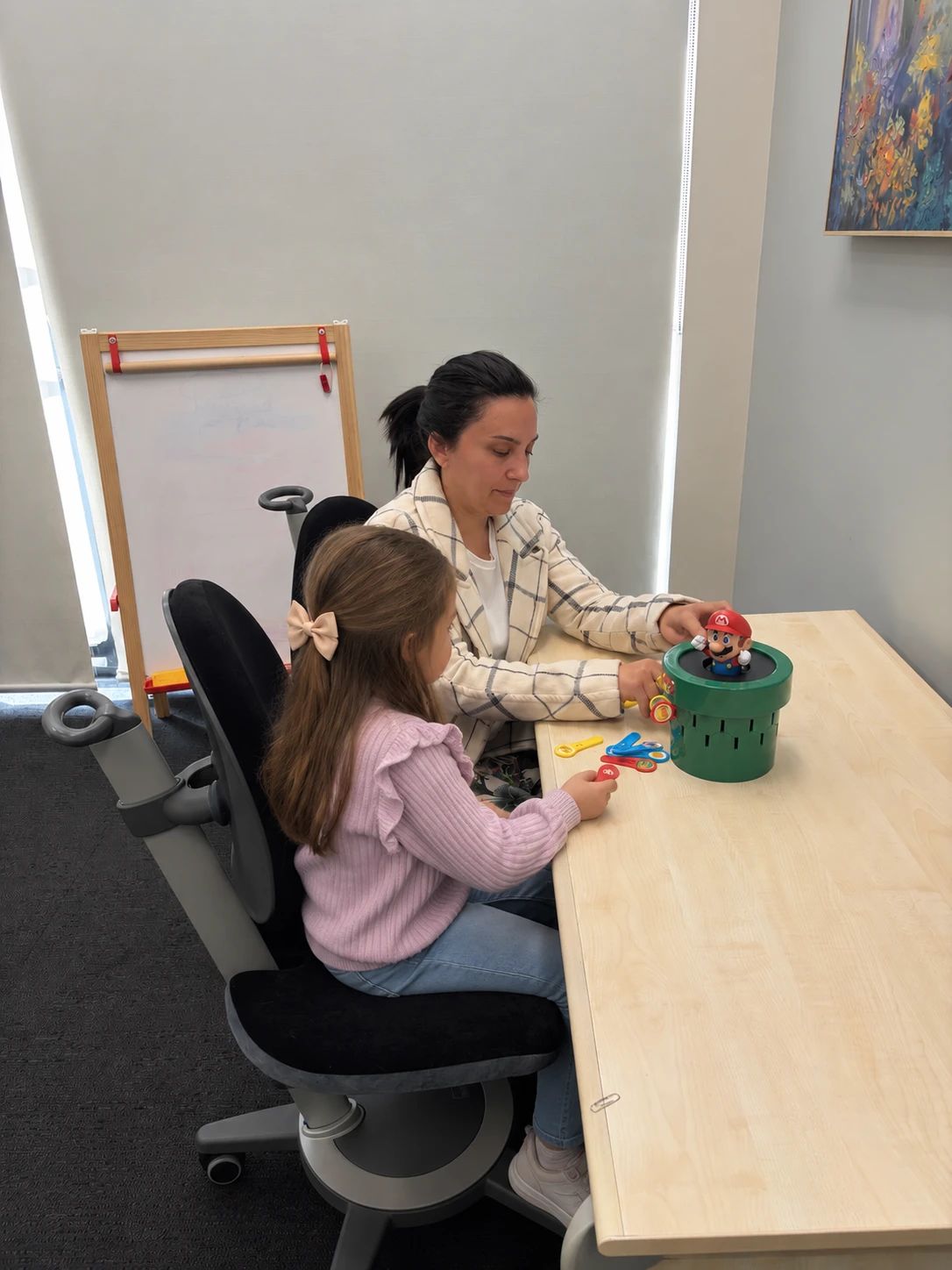
We carefully assess your child's speech, identify exactly which sounds or patterns to target, and use evidence based methods that make practice clear, achievable and fun.
Assess the sound system
We analyse which sounds and patterns are affected, and why, so therapy targets the right thing in the right order.
Choose the right approach
Articulation and phonological difficulties need different methods, we match the approach to your child's specific profile.
Practise with purpose
Through games and repetition at just the right level, your child builds accurate sounds from single words up to conversation.
Carry over to daily life
We help sounds generalise into everyday speech, with simple home practice that keeps progress moving.
Questions families often ask
Why is my child difficult to understand? Should I worry?
At what age should my child be saying all their sounds clearly?
Children learn speech sounds gradually, so it's perfectly normal for some sounds to develop earlier than others. Sounds like /p/, /b/ and /m/ usually develop first, while sounds such as /r/ and /th/ often develop later.
A helpful guide is how much of your child's speech other people can understand:
- 18 months: around 25% understood
- 2 years: around 50 to 75% understood
- 3 years: around 75 to 100% understood
- 5 years: around 95 to 100% understood by unfamiliar listeners
By the time children start school, they should be able to speak clearly enough to be understood in everyday conversations by people outside the family.
What's the difference between articulation and phonology?
How long does therapy take?
Want clearer speech for your child?
If your child is hard to understand or struggles with particular sounds, an assessment is a great first step. Get in touch to book.
Make an enquiry
We'll get back to you as soon as we can.